
Kia Braking and Towing Safety Guide: Brake Lines, Sensors, Trailer Brakes, Tow Straps, and Tie-Downs
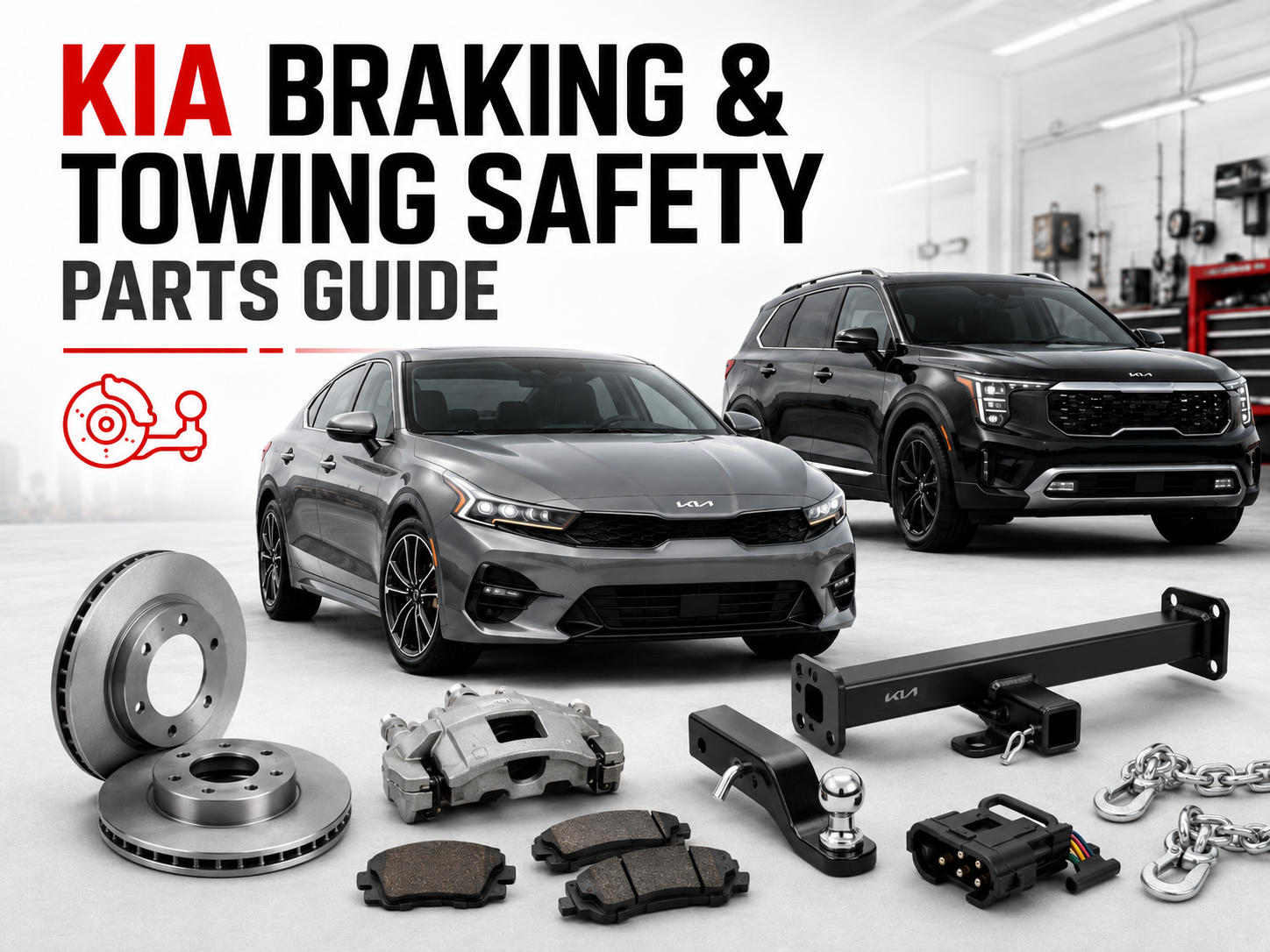
Brake and towing parts help your Kia stop, stay controlled, and handle extra load safely. A soft pedal, brake warning light, leaking brake line, weak trailer braking, or shifting cargo should be handled early. Genuine Kia OEM parts can help keep repairs affordable without giving up fitment, reliability, or warranty-safe quality.
Common Kia Braking and Towing Safety Issues
Kia owners often look for the lowest-cost fix first, but braking and towing symptoms can point to different systems. A soft brake pedal may suggest a hydraulic concern. A brake light or ABS warning may involve a sensor, switch, wiring issue, or fluid condition. When towing, longer stopping distance or trailer push can point toward trailer brake service instead of the Kia brake pedal itself.
That is why diagnosis matters. Replacing the wrong part can waste money, while ignoring a safety symptom can increase repair costs later. The goal is to match the symptom to the right Kia category before buying parts.
What These Safety Parts Do
Brake lines carry hydraulic pressure from the master cylinder toward the wheels. When a brake line rusts, cracks, weakens, or leaks, braking pressure can drop and pedal feel may change. If inspection points to the hydraulic system, shop replacement brake lines by exact model and brake setup before returning the vehicle to regular use.
Brake sensors and switches help the vehicle communicate brake-related information. They may be involved with brake lights, warning lights, ABS signals, or pedal-position information. If the issue looks electrical rather than hydraulic, the Kia brake sensors and switches category is a practical place to begin.
Trailer brakes help manage added towing weight. If a trailer pushes the Kia while stopping, grabs, pulls, or feels weak, inspect the trailer braking system before hauling again. For towing service, compare trailer brake parts that fit the trailer setup and braking needs.
A Practical Step-by-Step Safety Check
- Identify the main symptom first: soft pedal, fluid leak, warning light, brake lights not working, trailer push, or shifting cargo.
- Do a visual check before ordering parts. Look for wet brake lines, rust, loose fittings, damaged connectors, worn straps, bent hooks, or frayed stitching.
- Separate hydraulic symptoms from electrical symptoms. Fluid loss is different from a switch or sensor issue.
- Check towing concerns before the next trip. Trailer brakes should be inspected if stopping feels uneven, delayed, weak, or unstable.
- Match straps to the job. Do not use a cargo tie-down as a recovery strap, and do not exceed the strap rating.
- Confirm fitment by Kia model, year, trim, brake configuration, and towing setup before buying.
- Choose OEM Kia parts when possible to support proper fit, warranty-safe service, and longer-term savings.
Recommended OEM Parts and Kia Categories
For daily driving safety, start with the parts that match the symptom. Brake lines should be checked when the pedal feels soft, fluid is visible, or corrosion is present. Sensors and switches are more likely when brake lights, warning lamps, or pedal signals are involved. Trailer brakes should be reviewed before towing with heavy loads, hills, traffic, or changing weather.
For hauling and roadside planning, inspect straps before every use. Replace any strap with cuts, fraying, stretched webbing, damaged hooks, weak stitching, or unknown history. Using the right part for the right task is one of the simplest ways to avoid bigger expenses later.
Why OEM Quality Helps Save Money
Aftermarket brake and towing parts may seem cheaper upfront, but poor fitment, short service life, or inconsistent materials can create repeat labor and extra downtime. Genuine Kia OEM parts are built for the vehicle application, which helps cost-conscious owners protect reliability without overspending. For safety-related repairs, the long-term value is in parts that fit correctly the first time.
Key Takeaways
- A soft or sinking brake pedal should be treated as urgent.
- Brake warning lights and brake light failures may involve sensors, switches, wiring, or fluid condition.
- Trailer brake problems should be fixed before hauling again.
- Tow straps and tie-down straps are not interchangeable.
- OEM Kia parts help support fitment, reliability, warranty-safe repairs, and long-term savings.
Frequently Asked Questions
Can you drive with a leaking brake line?
No. A leaking brake line can reduce hydraulic pressure and braking ability. The vehicle should be inspected and repaired before normal driving.
What does a Kia brake light switch do?
A brake light switch commonly helps turn on the brake lights when the pedal is pressed. Depending on the vehicle, related signals may also support other systems.
Do trailer brakes need regular service?
Yes. Trailer brakes should be inspected before towing, especially after storage, heavy use, or any change in stopping behavior.
Are tow straps and tie-down straps the same?
No. A tow strap is intended for recovery or pulling support when properly rated, while a tie-down strap is intended to secure cargo.
Are OEM Kia brake parts worth it for budget repairs?
Yes. OEM parts can reduce fitment problems, repeat labor, and early replacement costs, making the repair more affordable over time.